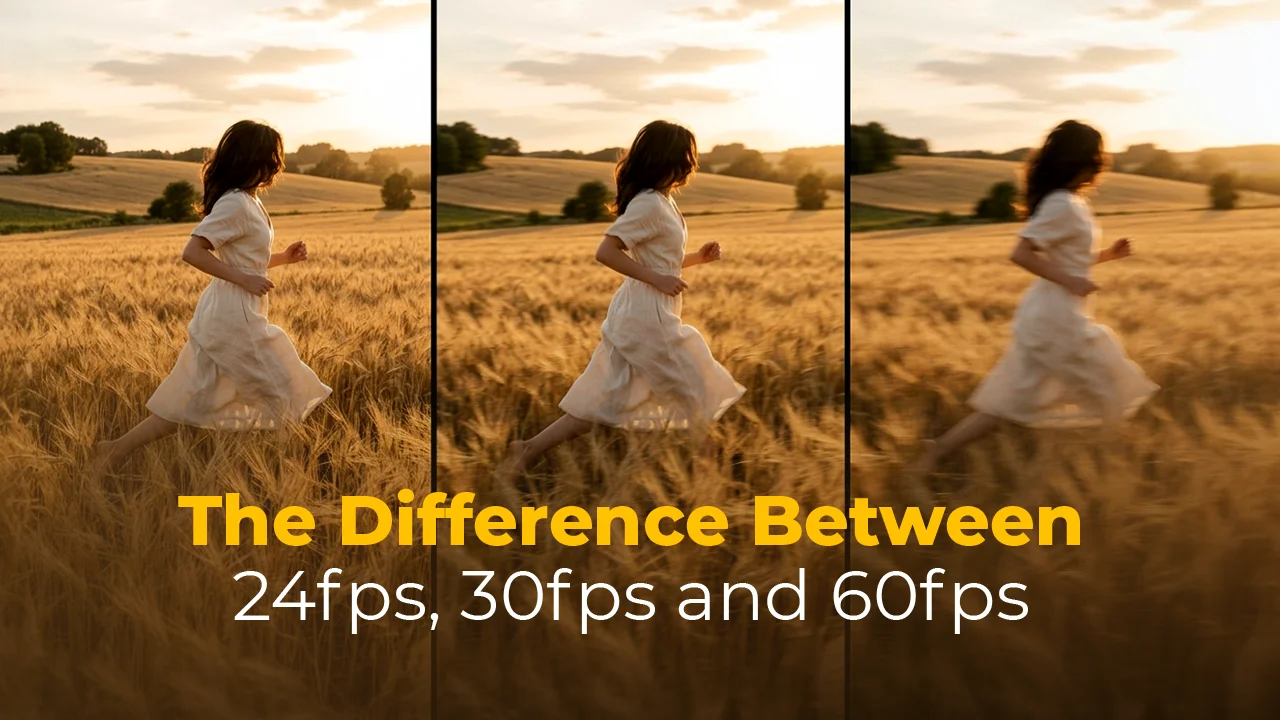
One of the most important decisions in cinema history was a camera setting: 24 frames per second. This number still beats at the heart of Hollywood today; the fundamental reason why the films we watch look "like a film" is precisely here. But when you shoot the same scene at 60fps, something strange happens — the image is technically far sharper, the motion far smoother, yet the heavy and deliberate texture of cinema instantly evaporates, and the screen starts to resemble a morning news broadcast. Frame rate is not merely a technical parameter; it is the very essence of perception, of time, and of cinema itself. In this article, we will learn the difference between 24fps, 30fps, and 60fps not only on technical grounds, but together with their aesthetic and emotional dimensions.
What Is Frame Rate? The Heartbeat of the Image
Frame Rate (frame rate), refers to how many still photographic frames a video contains per second. Its unit is FPS — Frames Per Second, meaning the number of frames per second. A video is nothing more than dozens of photographs shown rapidly on top of one another. The speed at which these frames are displayed per second directly determines both the fluidity of the image and how the viewer emotionally experiences that image.
The Mechanism That Tricks the Brain: Persistence of Vision
At the root of the illusion of motion lies a perceptual mechanism called Persistence of Vision. Even after an image disappears, the eye holds it briefly on the retina; when successive frames are shown fast enough, the brain interprets them not as separate photographs but as continuous motion. This illusion begins above approximately 12 frames per second; however, much higher values are required for "fluid" and "realistic" perception. At exactly this point, which speed you choose becomes critical.
Historical Background: How Did 24fps Become the Standard?
In the early years of cinema, cameras were cranked by hand and frame rate was inconsistent; the Lumière brothers' projectors typically ran at around 16 to 18 frames per second. In the silent film era, this flexibility was tolerable because there was no sound synchronized with the image.
Everything changed in the late 1920s when sound entered cinema. A fixed standard was required so that audio recording could be properly embedded onto the film strip and a consistent playback speed could be ensured across studios. 24fps was the threshold that satisfied both technical adequacy and economy: it minimized the amount of raw material the film would consume while providing sufficient visual fluidity. In 1927, SMPE (the Society of Motion Picture Engineers) effectively adopted this standard, and since that day the cinema world has been breathing with 24fps.
Television advanced along an entirely different path. In North America and Japan, the NTSC standard was set at 30fps (technically 29.97fps). Matching the 60Hz frequency of the electrical grid prevented pixel flicker on old CRT televisions. Europe, on the other hand, chose the PAL standard of 25fps, the equivalent of the 50Hz grid. To this day I still encounter this distinction in international productions, and it creates serious headaches during the editing phase. By the time you reach the end of this article, you will understand where that headache comes from and will clearly see which frame rate is the right choice for you.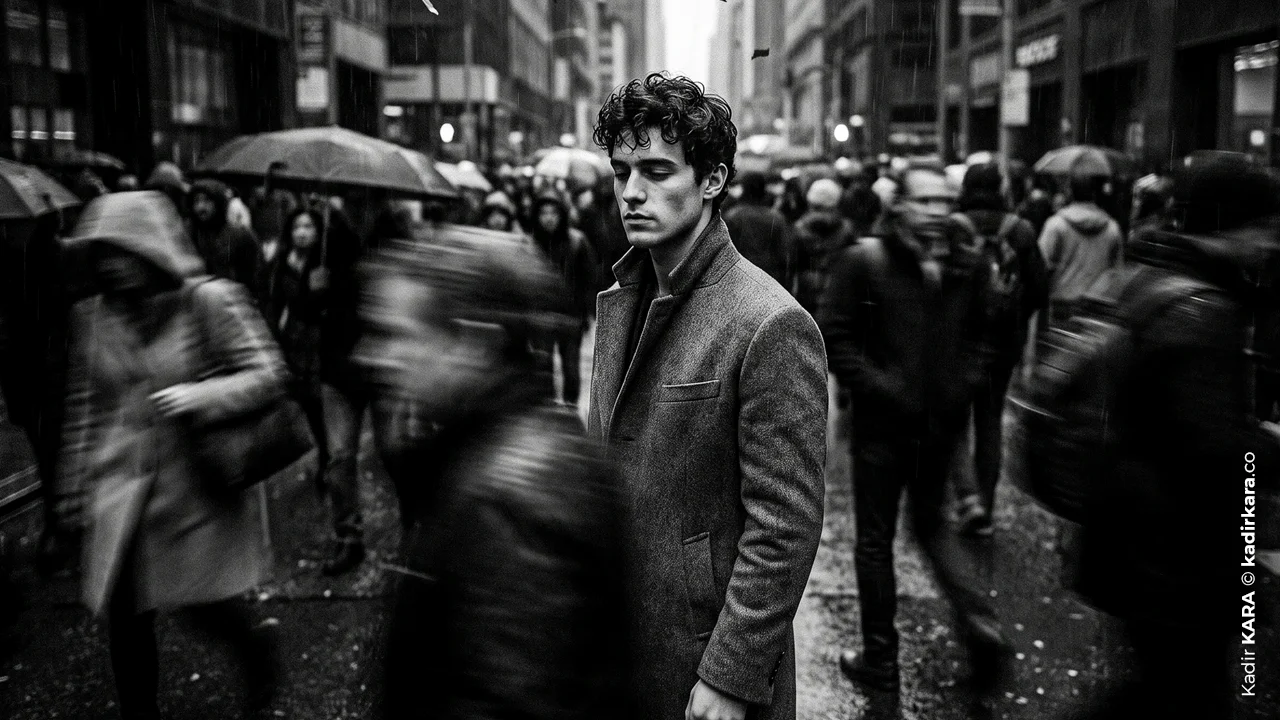
24fps: The Mathematical Secret of the Cinematic Feel
Behind the "cinematic" appearance of 24fps is not mere habit but a physical mechanism: motion blur.
The 180-Degree Rule and Motion Blur
When shooting video with a camera, it is not enough to set the fps alone; shutter speed is also an inseparable part of this equation. The 180-degree rule, the fundamental technical principle of the cinema world, states: your ideal shutter speed should be equal to the reciprocal of twice your frame rate.
- Ideal shutter speed for 24fps: 1/48s (1/50s is used in practice)
- For 30fps: 1/60s
- For 60fps: 1/120s
This formula ensures that moving objects are captured in the frame with a natural blur. When the eye looks at a moving object in real life, it also sees the same blur; because the retina is not an instantaneous camera — it is a continuously open lens. The 24fps + 1/50s combination mimics this natural blur and the brain accepts it as "real."
If you keep the shutter speed too high — for example, if you use 1/1000s while shooting at 24fps — every frame will be crystal sharp. But the transition between frames is deprived of natural smoothness; motion looks choppy, mechanical, even disturbing. We call this the "stroboscopic effect"; the wrong shutter speed choice can erase all the effort of the right fps choice.
Why Does 24fps Look "Like a Film"?
For decades, viewers learned that cinema was encoded at 24fps. This speed built the equation "cinema = 24fps" in our brains; today, when we see 24fps we automatically make the connection "this is a film." But this is not pure nostalgia. The natural motion blur of 24fps gives the image that characteristic weight, intentionality, and cinematic depth. The image is not "smooth" — it is "fluid"; the difference between these two words is far greater than it might seem.
30fps: Television's Legacy, Vloggers' Choice
30fps is the standard for news, reality shows, talk shows, and the majority of series productions. Compared to 24fps, it gives a slightly more fluid, slightly more "live" feeling. That is why it is preferred in news broadcasts to convey the message of "this is happening right now" to the viewer.
Today among content creators, 30fps is a popular choice, particularly for YouTube vlogs and talking head shots. The slight extra fluidity in the image conveys the pace of speech to viewers more comfortably and allows a little more tolerance for shooting conditions.
When you add a 30fps clip to a project shot at 24fps, serious problems arise at the editing table. Frame rate mismatch is one of the most frequently encountered and most frustrating issues in post-production. This decision must be made before the shoot; correcting it afterward costs both quality and time.
60fps and Above: The Price of Fluidity
A 60fps image contains two and a half times more information per second than 24fps. Motion appears in crystal clarity, not a single frame is lost in fast scenes. For sports broadcasting, video games, and action sequences, this is an advantage. But this advantage carries an unexpected price.
The Soap Opera Effect: Why Does High FPS Feel Off?
When you watch 60fps, something can feel wrong. The acting looks fake, the sets cheap, the image excessively "alive"... we call this phenomenon the soap opera effect. It takes its name from the soap opera broadcasts of the 1970s and 80s; these productions were shot with high frame rate video cameras, which is why they carried that characteristic "fake liveliness" texture.
So why does this feeling arise? 60fps reduces motion blur to nearly zero. Your brain interprets this crystal clarity not as "a camera is filming" but as "I am standing there right now and looking." This excessive realism, paradoxically, disconnects the viewer from the film because it eliminates the cinematic distance. The scene cannot conceal that it is fiction.
Many modern televisions artificially boost low-fps content to 60fps and above using processor assistance — this is called "motion smoothing," or, depending on the manufacturer, names such as TruMotion, MotionFlow, or Auto Motion Plus. Christopher Nolan, along with many other directors, has raised his voice for years calling for this feature to be turned off; the image designed for cinema is fundamentally altered by this process.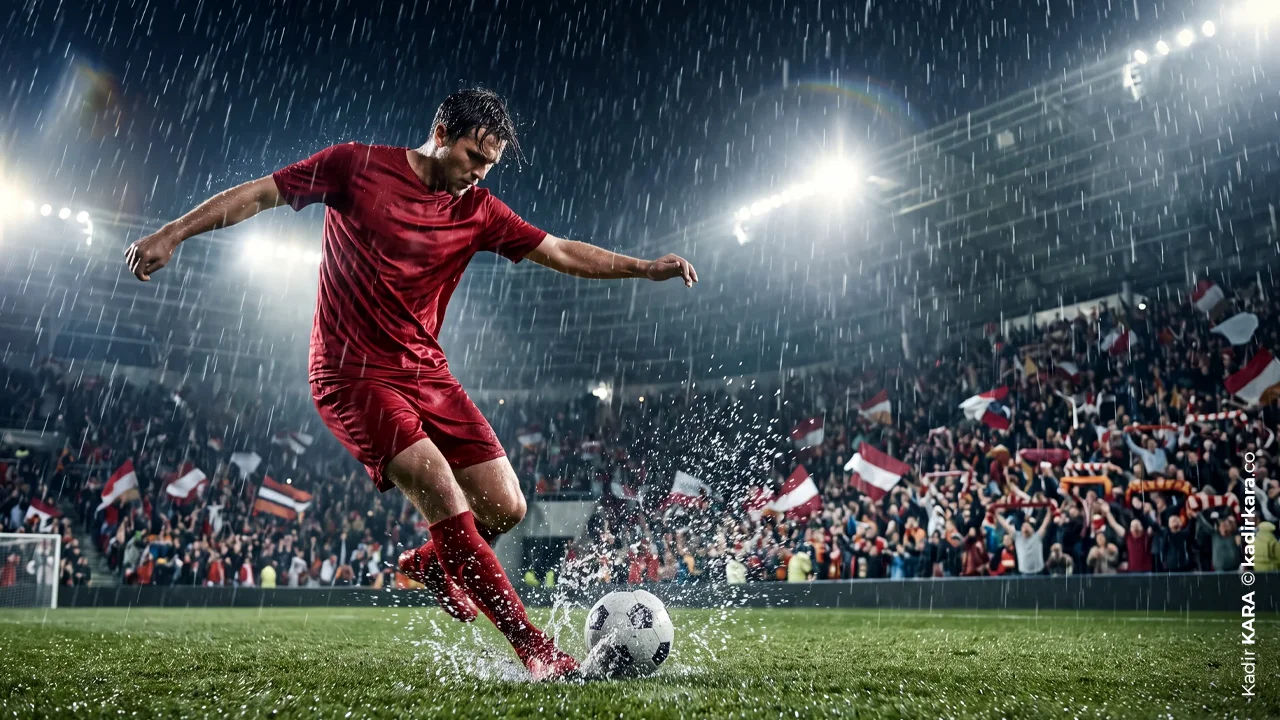
The Frame Rate of Sport, Gaming, and Motion
There are areas where 60fps truly shines: any content in which fast motion matters. You want to see exactly where the ball is in a football match; you have to process your opponent's moves in real time in a game; you want to capture the clarity of every blow in a combat sequence. In these contexts, 60fps is absolutely the right choice.
Likewise, high frame rate is essential for slow motion. Footage shot at 60fps plays back at approximately 0.4x speed on a 24fps timeline, and 120fps gives approximately 0.2x speed — without any loss of image quality. Shooting at 60fps or above as slow motion raw material is therefore an extremely practical choice.
HFR (High Frame Rate) experiments have also attempted to enter the heart of cinema. Peter Jackson shot The Hobbit: An Unexpected Journey (2012) at 48fps. It became one of the first large-budget HFR experiments in cinema history. The reactions were mixed; a significant portion of audiences found the image "cheap." Ang Lee shot Billy Lynn's Long Halftime Walk (2016) at 120fps. Technically revolutionary, but it did not receive the commercial reception expected. HFR remains an experiment that cinema is still trying to digest.
Which FPS for Which Content?
There is no single correct answer to this question, but there are clear guidelines:
24fps
Feature films, fictional short films, cinematic videos, music videos, commercials, documentaries... All content in which you want to speak the "language of cinema."
30fps
News, talk shows, vlogs, YouTube talking head content, corporate promotional videos... Situations where you want a "live and real" feel but full sports fluidity is not required.
60fps
Sports broadcasts, gaming content, action sequences, any shot where fast motion needs to be captured, and footage to be used as slow motion raw material.
120fps and Above
Professional sports broadcasting, high-quality slow motion production, and experimental content.
Platform-Based Frame Rate: A Practical Note
YouTube supports 24, 25, 30, 48, 50, and 60fps without issue — it broadcasts at the frame rate you upload. TikTok and Instagram Reels support 30fps and 60fps content; 24fps is accepted but the platform may apply a slight conversion in some codec combinations. Streaming platforms such as Netflix generally prefer content at 23.976 or 25fps depending on region; these values are compatible with international broadcast standards.
Frame Rate and File Size: The Overlooked Reality
As frame rate increases, file size grows proportionally. A 60fps video produces approximately twice as much data as a 30fps video at the same resolution and codec. This is a significant factor in terms of storage, post-production speed, and render time. Hours of raw footage shot at 60fps unnecessarily will dramatically increase your workload during color correction and export stages. Asking whether your content really needs 60fps is at least as important a question before the shoot as the budget.
A BRIEF NOTE
The topic of frame rate is not merely a technical parameter for me. Over the years I noticed that in the vast majority of videos people complained about as "not looking cinematic," the problem was not the lens, not the lighting, not the color knowledge — the problem was the fps setting. Someone picks up a camera and shoots at 60fps because they operate with the logic of "higher is better," then asks "why does this look so flat?" The answer is not in the camera — it is in the mind.
I wanted to write this article for a specific reason: the frame rate decision must be made before the shoot. You cannot change frame rate in post-production; when you try, you end up with either stutter artifacts in the image or the product of artificial interpolation. This decision is as fundamental as choosing your subject matter — but it is most often the last thing people think about.
Let me add one more thing: the fact that 24fps is "cinematic" is now a fully conscious aesthetic choice. In the digital age there is no technical necessity. But make this choice knowing why you are making it. If you want to speak the language of cinema, learn the syntax of 24fps. If you simply want to "be there right now," 60fps is just right for you. Knowing the difference between the two is half the job.
While preparing this article, I carefully verified the historical data; I left out technical specifications that could not be confirmed. The deeper the topic of frame rate goes, the more questions each layer opens — I hope this article becomes the starting point for those questions.
DID YOU KNOW? - 8 QUESTIONS 8 ANSWERS
1. Why is 30fps not exactly 30fps, but 29.97fps?
This value, used in the NTSC television standard, emerged during the transition to color broadcasting in the early 1950s. In order to broadcast black-and-white signal and color signal simultaneously, the speed was slightly reduced from 30.00fps to prevent interference between the audio frequency and the color carrier frequency: 29.97fps. Since that day, this value, known as "Drop Frame Timecode," has remained the standard of the production world. That 0.03 after the decimal point, in other words, is a remnant of a historical engineering compromise.
2. Why does your camera show "23.976fps" when you select "24fps"?
This is a technical compatibility value from the same family as 29.97fps. The difference between true 24fps and 23.976fps is so small (0.024 frames per second) that the human eye cannot perceive it. But in the broadcast world, this difference is critical in terms of timecode compatibility. 23.976fps is designed to work in compatibility with NTSC broadcast infrastructure; for this reason, the "24fps" value preferred in digital cinema and streaming platforms is in fact most commonly 23.976.
3. What should I do on my television to eliminate the soap opera effect?
It is enough to turn off your television's "motion smoothing" or "motion interpolation" feature, which goes by names such as TruMotion (LG), MotionFlow (Sony), or Auto Motion Plus (Samsung) depending on the manufacturer. This feature fundamentally alters the texture of the image by artificially boosting 24fps content to 60fps or above. When turned off, the content is watched at the frame rate the director intended. It is usually found in the settings menu under the heading "Picture" or "Advanced Picture."
4. What happens when 24fps content is converted to the PAL system (25fps)?
There are two paths: either the content is slightly sped up — which raises film scores by approximately a semitone and shortens the total running time — or a technique called "pulldown," which involves adding frames, is used to preserve the speed, but slight artificial differences may appear in the image. In the old DVD era, this was precisely the reason why the running time of the European versions of films was a few minutes shorter than the North American versions. This went unnoticed for years.
5. What is the minimum number of fps required for slow motion footage?
It depends on how slow a motion you want at standard playback speed (24 or 30fps). Footage shot at 60fps plays back at approximately 0.4x speed on a 24fps timeline. 120fps gives approximately 0.2x, and 240fps gives approximately 0.1x — these values can be used as calculations, but the precise ratio varies depending on the camera's actual output frame rate and your timeline. A minimum of 60fps footage is required for usable slow motion without loss of image quality; for more dramatic slowdowns, 120fps and above is essential.
6. Why did Peter Jackson shoot The Hobbit at 48fps and why did audiences dislike it?
Jackson anticipated that 48fps, especially combined with 3D, would strengthen the perception of depth and draw viewers more deeply into Middle-earth. But the majority of audiences found the image "cheap" and "soap opera-like." The reason is exactly what we described in this article: because high frame rate eliminates motion blur, the brain interprets the image as "broadcast" rather than "cinema." Costumes look fake, sets look artificial; because the sharpness beyond what is familiar destroys the distance fiction requires cinema to maintain.
7. Is there really a difference between 60fps and 30fps in a video game in terms of human reflexes?
Yes, and this difference has been measured. 60fps halves the waiting time per frame compared to 30fps; this directly affects reaction time (input lag), particularly in competitive online gaming. The vast majority of players feel 60fps as more "responsive." Some experienced players can also distinguish the difference between 60fps and 120fps. This is why modern console and graphics card manufacturers are increasingly promoting 120fps support.
8. What can you do in post-production if you shot your video at the wrong frame rate?
There are options, but none of them delivers the ideal. When you place footage shot at 30fps into a 24fps timeline, you have two choices: either you generate "fake" frames using various software tools (with the risk of slight artifacts in the image), or you slow the footage to 80% of its speed and use the original frames. This also creates a slight unwanted slowdown. Both paths involve loss. The cleanest solution is still to make the right decision before the shoot. There are no frame rate miracles in post-production.


