
In the summer of 1974, three mechanical sharks lowered into the salt water off Martha's Vineyard broke down one after another; the reason was simple — the devices had been tested in fresh water. Steven Spielberg's 55-day shooting schedule stretched past 150 days, and the budget rose to nearly two and a half times its original size. We remember Jaws today as a masterpiece, but the record is clear: the source of that chaos wasn't behind the camera — it was work that hadn't been done before the camera ever rolled. In video production, pre-production is the stage where the script, budget, shot list, and location are perfected on paper, and a large part of a project's final quality is determined at this stage, before the camera ever runs. In this piece, I explain why pre-production isn't a "preliminary preparation" but the work itself, drawing on both cinema's most expensive lessons and the way the most masterful names in the field operate.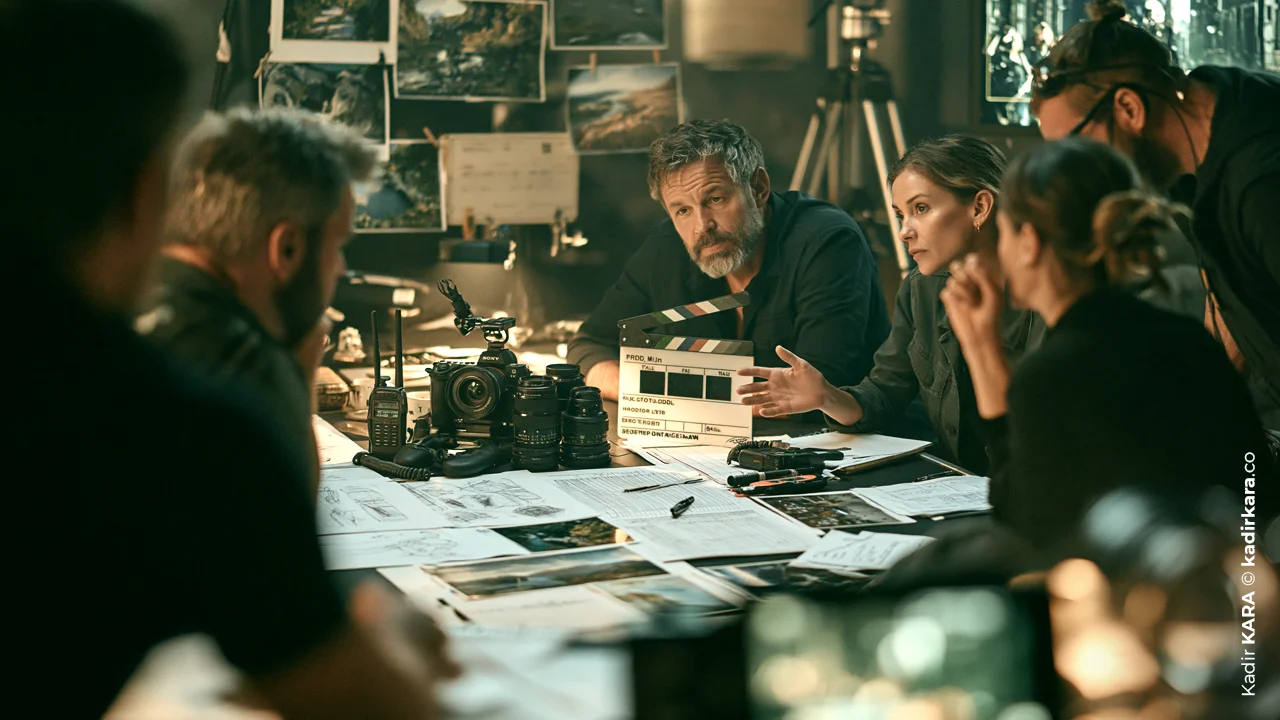
What Exactly Is Pre-Production?
Pre-production is the planning stage that runs from a video or film project's formal approval to the first day of shooting. At this stage, not a single frame has been shot yet, but nearly every decision about how the project will be shot is made here. Who will shoot it, where, when, with what equipment, and on what budget. Not a single frame is — or should be — shot before the answers to these five questions are clear. For a feature film, this process can stretch from three months to a year, while for a short promotional or explainer video it can be limited to a day or two. The scale changes, the logic doesn't: no matter how small the project is, pre-production is not a formality that can be skipped — it's the one window where risk is eliminated at the lowest cost.
At this stage, two different perspectives meet at the same table. The director sets the creative direction: the visual language, the performances, how the narrative will flow. The producer, meanwhile, asks whether all of this is actually possible. Budget, schedule, logistics, contracts... It's no coincidence that the cinematographer and the director visit the pre-selected locations together before shooting. They need to be able to discuss, calmly and on-site, whether a given location will actually work. Because the real job of pre-production is to solve the problems that could arise on shoot day before that day ever comes.
The moment pre-production ends is clear: it's the moment the set first shifts into "ready" mode, the moment the first clapperboard is snapped. But the time leading up to that moment stretches incredibly depending on the project's scale. A thirty-second video shot for social media can compress this process into a few hours. A corporate promotional film can spread it across a few weeks. A feature-length production can take months, even a year. Even as the duration changes, the number of steps skipped shouldn't. On a small project, it's legitimate to speed up pre-production; it's not legitimate to skip it. The difference is the difference between fitting hours of work into thirty minutes and not doing that work at all.
"Video Production" and "Filmmaking" Are Not the Same Thing
These two terms are used interchangeably in everyday language, but the difference between them directly determines the scope of pre-production. Video production focuses on formats like marketing videos, corporate content, and online media, and generally involves shorter production timelines and simpler scripts. Filmmaking, on the other hand, covers short or feature-length works with complex narratives and requires much more extensive pre-production and a larger crew. Knowing this distinction is the fastest way to get expectations and budget on the same page the moment a brand says, "we need a video that looks like a film."
| DIMENSION | VIDEO PRODUCTION | FILMMAKING |
|---|---|---|
| Focus | Marketing videos, corporate video, online media | Short/feature-length, complex narrative |
| Script Complexity | Relatively simple, single-message focused | Detailed, multi-layered |
| Team Size | Small, multi-functional team | Large, department-divided team |
| Production Duration | Generally short cycles | Generally long cycles |
| Pre-Production Intensity | Focused but light | Comprehensive, can span months |
| The key differences that set video production apart from filmmaking. | Kadir KARA © kadirkara.co | |
This table doesn't establish a hierarchy; video production isn't "smaller" or "easier" than filmmaking — it's a different discipline. The problem arises when this difference collides with client expectations: when a brand wants the visual quality of a film set on a two-day video production budget, what's actually happening is that they're conflating two different pre-production models. Having this conversation in the first meeting is far cheaper than experiencing disappointment on shoot day.
Why Not "Pre"? The Center of Gravity of the Three Stages Is Actually at the Beginning
The name "pre-production" mismarks this stage. The word "pre" gives the impression of a preparation, a warm-up lap; yet of the three stages, this is the one where a mistake is fixed at the lowest cost. A decision that goes wrong in pre-production is as simple as deleting a word. You change the script, you redraw the storyboard. In the production stage, the same mistake means an extra shooting day, additional equipment rental, an exhausted crew. In post-production, it's often unsolvable: footage that was never shot cannot be conjured up at the editing table.
| STAGE | TYPICAL DURATION (FEATURE-LENGTH) | FOCUS | COST OF A MISTAKE |
|---|---|---|---|
| Pre-Production | 3 Months – 1 Year | Script, budget, casting, location, shot list | Nearly zero - corrected on paper |
| Production (Principal Photography) | 1 – 3 Months | Footage and audio capture, crew coordination | High - reshoots, extra day rates, extended equipment rental |
| Post-Production | Several Months | Editing, color grading, sound design, effects | Very high or unsolvable - unshot footage can't be created in the edit |
| A comparison of the three production stages by duration, focus, and cost of error. | Kadir KARA © kadirkara.co | ||
A short promotional film can be completed in 1-2 days, and the principal photography of a feature film can be completed in 1 to 3 months, but no matter the scale, the logic in this table doesn't change: every extra hour spent is the bill for a problem skipped in pre-production.
So given such clear logic, why does the industry still call this stage "pre" and push it into the background? I think the reason isn't technical, it's psychological. Shoot day is visible. Camera, lights, crew, movement; when a client or an executive shows up there, they feel that "work is being done." Pre-production, on the other hand, is a process that takes place in a meeting room, often looking as mundane as a spreadsheet or a phone call. It's hard to value work that isn't visible; that's why, when time pressure is felt, the first place to get cut is the place whose consequences are seen last.
The teams that pay the price for this the most are those with tight budgets. A big studio can cover up a mistake made in pre-production with an extra day. For an independent production or a one-person content team, the same mistake can wipe out the project's profitability entirely. That's why the sentence "I don't have time to spare for pre-production" is actually a sentence that should be saying the exact opposite. The fewer resources you have, the more time you need to put those resources in the right place.
The logic in aviation isn't any different; pilots check off a checklist of dozens of items one by one before takeoff; this list is boring because it exists, in large part, to confirm in advance that nothing will go wrong. When that boring list gets skipped, the result usually shows up not in the air, but on the runway, before takeoff. Just as a production's most expensive mistakes are also, for the most part, committed before the camera is ever turned on.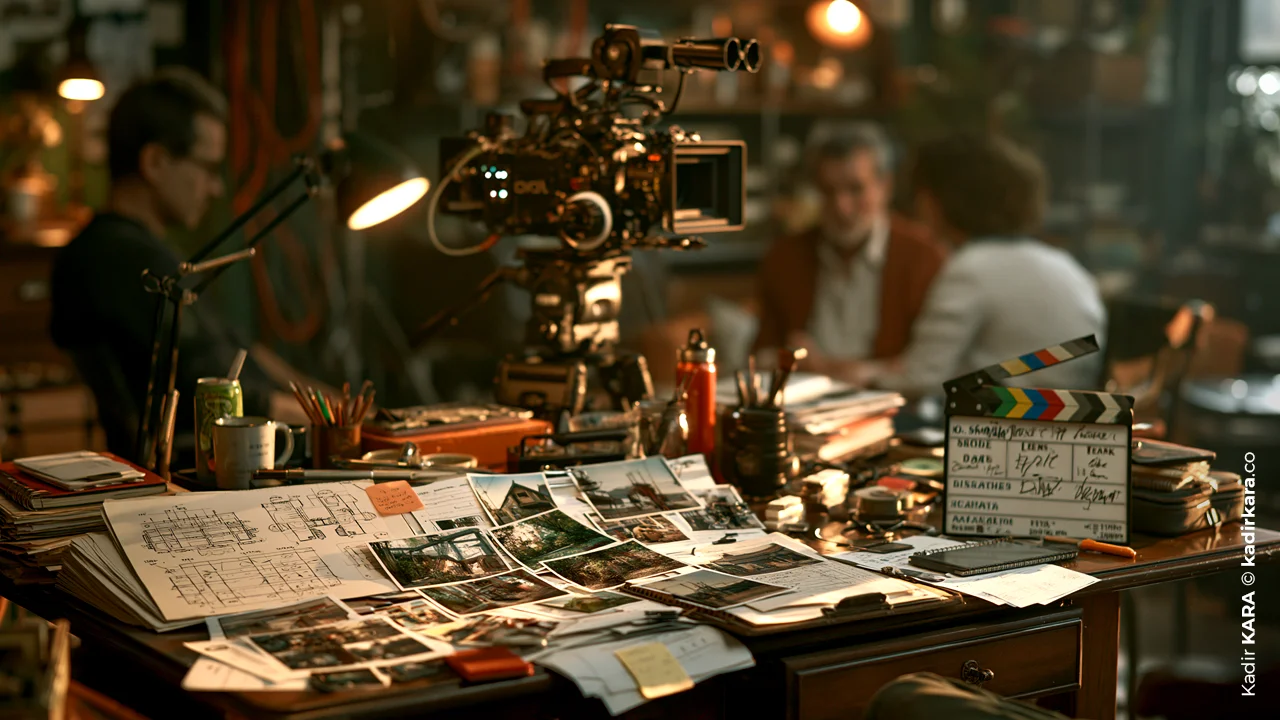
The Five Components of Pre-Production
Pre-production isn't an abstract concept; it's the sum of five concrete headings. When one of these headings is missing, the project remains fragile no matter how solid the other four are. It's like a table with four sturdy legs and a fifth rotten one; the table stays standing for a while, but the moment weight is applied, the side that tips over is always the same side. The five headings below don't proceed in strict sequence, but they all move forward interconnected.
Script and Concept
Everything starts here; the clarification of the story, the message, and the structure. The storyboard and the text take shape together at this stage, because until it's clear what a scene will convey, neither the production design nor the shot list can become meaningful. The only question that needs to be asked here is this: after watching this video, what should the viewer feel, know, or do? Every scene written before this answer is clear turns, on shoot day, into the question "what were we actually trying to say here?"
Budget and Timeline
A draft budget is drawn up before the project begins, with every line item added without skipping anything — equipment rental, talent fees, transportation, food. A single overlooked location usage fee can burn through the "unforeseen expenses" line item within seconds. That's why a transparent budget is a precondition for sustainability. The timeline demands the same rigor: mapping out in advance the dependencies between shooting days, rehearsals, and delivery deadlines lets you see the chain reaction of a single day's delay.
Casting and Crew
Alongside the selection of the actor or presenter, the entire crew, from the camera operator to the sound engineer, is brought together at this stage. When working with non-professionals or on corporate projects, fitting the shooting process to their schedule and comfort level directly affects both efficiency and crew morale on set. If you're working with an inexperienced actor, the half hour you set aside for rehearsal prevents the two hours you'd lose on shoot day.
Location, Permits, and Contracts
Location scouting isn't just a visual preference, it's a legal step. The necessary permits, insurance, and consent forms are obtained at this stage. Written service contracts are drawn up with talent agencies, equipment rental companies, and location owners. Because a long stretch of time can pass between planning and execution, putting commitments in writing is a matter of security, not professionalism. Testing a location's background noise, light direction, and electrical infrastructure before the shoot minimizes the "what do we do now" moment on shoot day. In Turkey, this step also intersects with local bureaucracy. Municipal permits, filming fees on private property, and additional approvals required in certain public spaces can vary from city to city, even from district to district. Clarifying this variability in pre-production, rather than leaving it to shoot day, can eliminate from the outset a delay that could take hours in a crowded city.
Storyboard and Shot List
The storyboard is the primary tool that guides the shooting schedule; it ensures the crew speaks a shared visual language. The shot list and the prep list that derive from it put down in writing, in advance, how shoot day will proceed hour by hour. Once the set is built, what gets discussed is no longer what will be shot, but how what was planned will be executed. A crew that goes onto a set without a shot list loses minutes, sometimes hours, searching for the answer to "what's next" between every scene. And that, by the end of the day, means sacrificing either the budget or the number of scenes planned.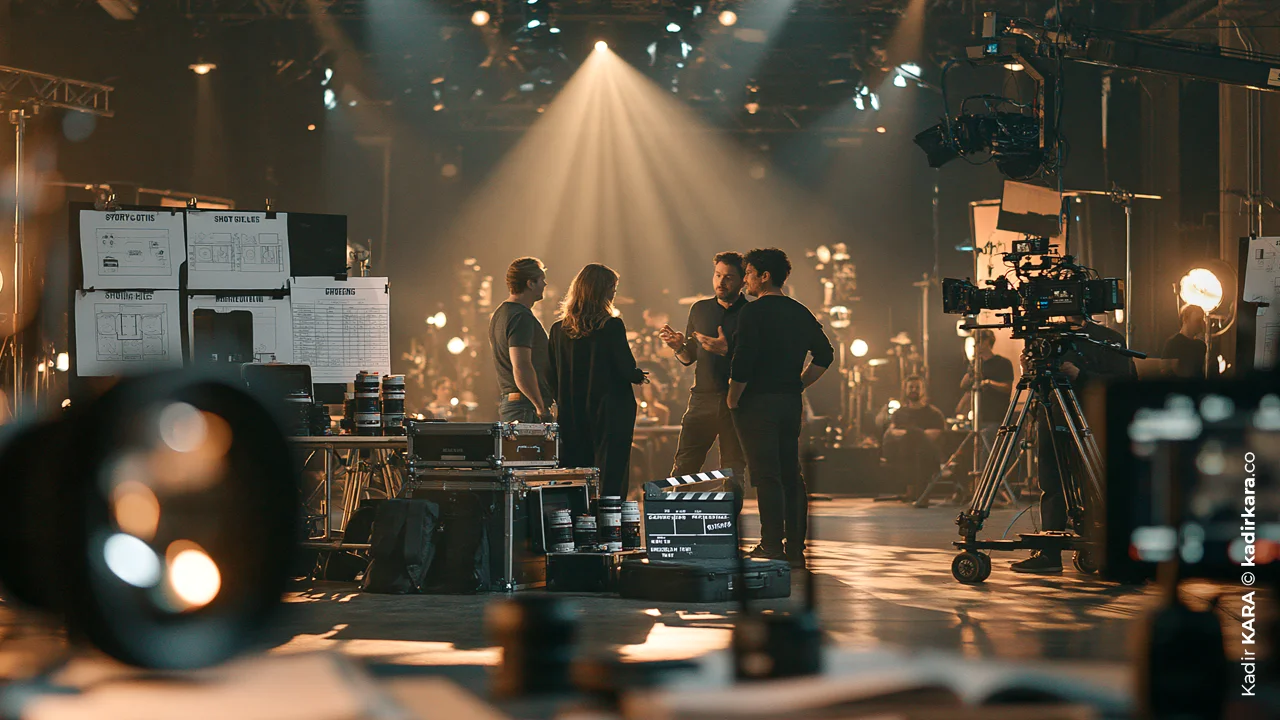
Planning Doesn't Kill Creativity, It Makes It Possible
The most common objection raised against pre-production is this: doesn't such a tight plan kill improvisation and surprise on set? Experience gained on this shows exactly the opposite. A set with a clear budget, schedule, and logistics tells the creative team, "be as bold as you want within these limits." An uncontrolled set, on the other hand, turns every creative idea into a risk calculation, because no one knows how that idea will shake up the budget or the schedule. Most of the sets that look the freest are actually the most tightly planned ones, because the mental load hasn't been carried onto shoot day, and attention can shift from logistics to creativity.
The most concrete evidence of this is how often "happy accidents" turn up on well-planned sets. Moments when an actor improvises unexpectedly, when the light falls differently than planned but more beautifully... these usually happen not on unprepared sets, but, quite the opposite, on sets where the crew's attention has been freed from logistics and can be devoted to that moment. Surprises happen on chaotic sets too, but they're usually not the "happy" kind — they're the kind that need to be managed.
Digital Tools Are Changing Pre-Production, Not Eliminating It
Over the past few years, software that generates script breakdowns, creates automatic shooting schedules, and produces moodboards has become widespread. These tools make a real difference. Mechanical tasks that used to take hours can now be completed in minutes. But one shouldn't fall into a misconception here: these tools speed up planning, they don't make planning itself unnecessary.
A piece of software can tell you "this scene has three actors, one exterior location, and one vehicle," but it can't decide why that scene moves the story forward, or whether that vehicle is actually necessary. The essence of pre-production has always stayed the same. Judgment about which risk can be taken on, which detail is indispensable. Digital tools can feed that judgment, supply it with data, but they can't replace it. In fact, the best-used tools are the ones that increase the speed of human decision-making, not the ones that make the decision in the human's place.
"All great work is preparing yourself for the accident to happen."
Sidney Lumet
Risk Management: Pre-Production's Insurance Policy
In a professional production, there should always be a Plan B, even a Plan C, ready to go. One of the crew falling ill, a technical malfunction, unexpected weather... none of these should be dismissed as low-probability, because as the number of shooting days increases, the likelihood of at least one of them happening rises quickly. A good production team doesn't stop work when it hits a setback; it activates the alternative it prepared in advance. Preparing that alternative in a calm office setting, during pre-production, is always cheaper than improvising under pressure on shoot day.
Risk categories also branch out on their own: external risks like weather conditions, human-dependent risks like the health of an actor or crew member, technical risks like a piece of equipment breaking down... You don't need to work out a separate backup plan for every category, but at the very least, the answer to "if one of these three happens, who's the first person we call, what's the first decision we change" should be ready during pre-production.
When you line up all these headings side by side, the picture that emerges is actually simple. What determines quality in video production isn't the effort spent on set, it's how solid a foundation that effort sits on. A talented director can still capture good shots on a poorly planned set, but they do it every time with more energy, more stress, and more budget than necessary. Pre-production is the one stage that eliminates that excess. That's why I recommend starting your next project not with the question "when do we start shooting," but with the question "how much time are we setting aside for pre-production"; no matter how boring that answer looks, it's that answer that really determines the project's fate.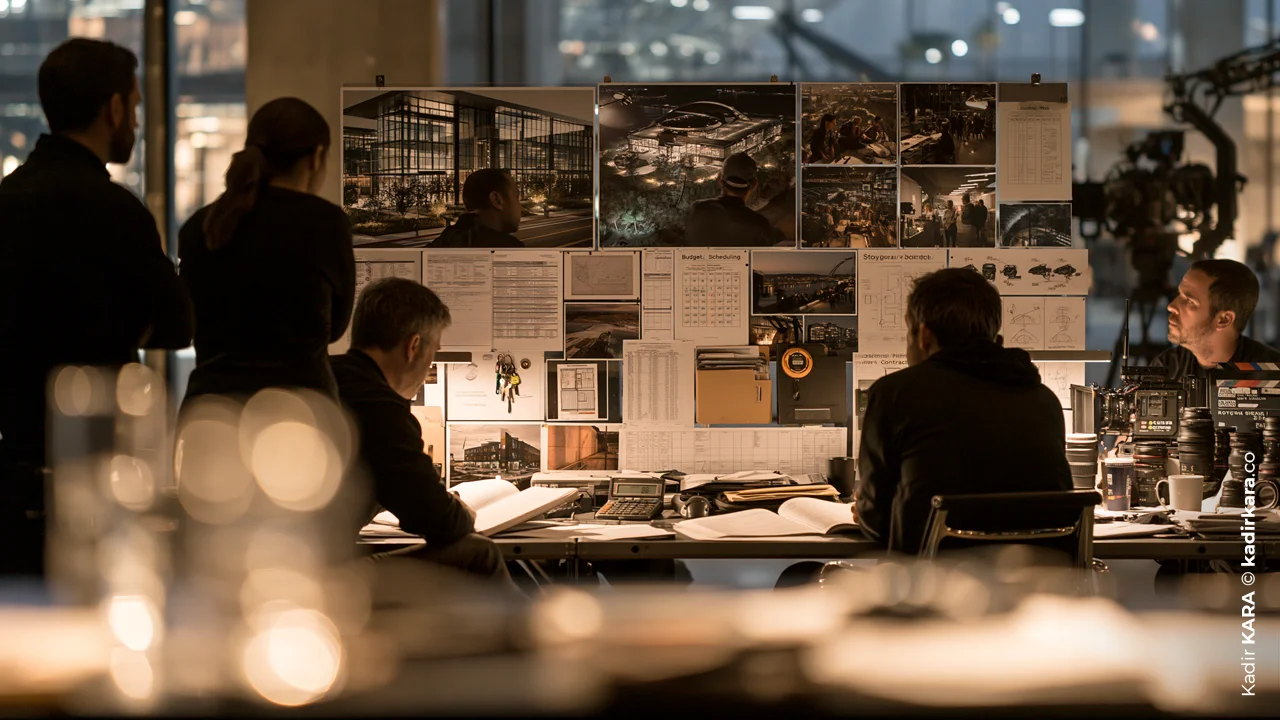
A SHORT NOTE
The most consistent pattern I've seen across every video shoot I've been part of so far is this: a production's quality is determined as much by the talent on set — sometimes even more so — as by the decisions made before the camera ever turns on. A creative team can always come up with a brilliant idea, but pre-production that fails to fit that idea into the budget, the schedule, and the constraints of the real world turns even the best idea into a crisis on set. That's why I wanted the new content in the Video & Production category to start not with the question "how do we shoot better," but with the question "why do we so often lose before we even get to shooting." How you build a building starts with how you lay the foundation; I'm following the same logic for this section.
DID YOU KNOW? 10 QUESTIONS 10 ANSWERS
1. Are pre-production and the "development" stage the same thing?
No, they're two different phases. Development is the phase where it's determined whether an idea will become a project, where the first script drafts are written, and where financing is sought. The project hasn't received a "green light" yet. Pre-production, on the other hand, begins after the decision "this will be shot" is made, and at that point you've entered a commitment that's hard to reverse.
2. Why is the pre-production timeline for a commercial and a feature film so different?
The difference comes from the exponential growth in the number of variables that need to be coordinated. While a few locations and a small cast are enough for a short commercial, a feature film has dozens of locations, a large cast, and a months-long, interdependent logistics network.
3. Is going into a shoot without a storyboard really that risky?
The risk is directly proportional to the project's complexity. For a single interview with a fixed camera, it might be a luxury, but for work where the composition needs to be planned scene by scene, the storyboard is the one tool through which the crew speaks a shared language. Going in without one is like starting construction without a plan.
4. Does a small-budget corporate video still need full-scale pre-production?
The scope shrinks, the necessity doesn't disappear. A one-day shoot doesn't need a three-month process, but going onto a set without a flow, location approval, and an equipment list leaves an already-tight budget even more exposed to mistakes.
5. Is preparing a Plan B a waste of time, or an investment?
An investment — usually the cheapest kind of insurance there is. As the number of shooting days increases, so does the likelihood of an unexpected disruption. Preparing Plan B calmly, in advance, is always cheaper than improvising under pressure.
6. What's the most commonly skipped step in pre-production?
In my experience, putting vendor and location contracts in writing. As long as the parties act in good faith, no problem arises, but as the project grows, or when a dispute comes up, not having a written agreement leaves you exposed.
7. Do AI and automated tools eliminate pre-production?
They change it, they don't eliminate it. Mechanical tasks like script breakdowns or schedule creation are getting faster, but deciding why a given scene matters still requires human judgment. Tools speed up planning; they don't make it unnecessary.
8. As the crew gets smaller, does the importance of pre-production decrease or increase?
It increases. On a large crew, there's a higher chance of finding a backup resource to make up for a mistake. On a one- or two-person production, there's almost no margin for making things up, which makes planning the limited resources well all the more critical.
9. Does a thirty-second social media video follow the same pre-production logic?
The logic is the same, the scale is different. Even for a short video, the message needs to be clarified and a shooting plan needs to be made; it's just that these decisions are made within hours, whereas a feature film's are made within months. The shortness of the format changes the speed of planning, not the need for it.
10. Why does a crew that has done its pre-production well work more freely on set?
Because the mental and logistical load hasn't been carried onto shoot day. The crew arrives on set not with the question "what are we shooting today," but with the question "how do we tell this scene better." As uncertainty decreases, attention shifts from logistics to creativity.


